
Facial aging is not simply wrinkling. Bone remodels, facial fat compartments change, support structures loosen and skin quality declines. Significant weight loss may reveal or accelerate the appearance of deflation. The right plan depends on which layers are changing—not on choosing a product from a menu.
You may notice that the face looks tired, flatter or less defined even when the skin itself has not changed dramatically. Cheeks may appear lower, temples or under-eyes may look hollow, and the jawline may become less crisp. These changes often reflect facial volume loss and structural aging.
What is facial volume loss?
A youthful face is supported by several connected anatomical layers. Each changes differently over time:
Facial bone
The facial skeleton is not static. Imaging studies have documented age-related remodeling in areas including the orbit, maxilla and mandible. These changes may reduce support for the overlying soft tissues.
Facial fat compartments
Facial fat is organized into distinct compartments rather than one uniform layer. Research suggests that these compartments can migrate, lose volume or change at different rates, which helps explain why aging may look uneven rather than simply “smaller.”
Ligaments and soft-tissue support
Retaining structures help stabilize facial tissue. With age and tissue change, folds, jowling and contour transitions can become more visible. Not every fold should be filled directly; sometimes the more important issue is support elsewhere.
Skin quality
Collagen, elasticity, hydration, pigment and cumulative sun exposure affect the outer envelope. Restoring contour beneath skin that is thin, uneven or sun-damaged may not fully address the concern.
What commonly contributes to facial deflation?
- Chronological aging: region-specific changes in bone, fat and skin accumulate over time.
- Sun exposure and smoking: both can accelerate visible skin aging.
- Hormonal change: perimenopause and menopause can coincide with changes in skin thickness, hydration and elasticity.
- Genetics and baseline anatomy: some people naturally develop earlier temple, cheek or under-eye hollowing.
- Significant weight loss: loss of facial fat can occur along with body-fat reduction, regardless of how the weight was lost.
Is “Ozempic face” a real diagnosis?
No. “Ozempic face” is a popular, nonmedical phrase for facial changes noticed after weight loss. These changes are not unique to Ozempic or even to GLP-1 medications. They may also follow bariatric surgery, dietary weight loss or illness.
A small 2025 imaging study of 20 patients using GLP-1 agonists found measurable midfacial volume reduction and an association between weight loss and superficial facial volume change. It is useful early evidence, but the sample was small and does not prove that medication independently causes facial aging. The more accurate explanation is that substantial weight loss can reduce facial fat, and skin may not contract at the same pace.
Important: Do not stop or alter a prescribed medication because of cosmetic concerns without speaking with the prescribing clinician. Health benefits, risks, nutrition, lean-mass preservation and the pace of weight loss belong in the same medical conversation.
What treatment options may help?
There is no universal treatment sequence. After an in-person assessment, options may include:
Hyaluronic-acid fillers
Products such as Juvéderm and Evolysse may be considered for selected contour and volume concerns. The objective should be proportionate structural refinement—not simply filling every visible line.
Biostimulators
Sculptra and Radiesse use different materials and have different labeled indications. In appropriately selected patients, they may be considered when gradual collagen support or broader structural treatment is desired. They are not interchangeable, and they are not as readily reversible as hyaluronic-acid filler.
PDO threads
PDO threads may be an option for selected patients with mild to moderate tissue laxity and realistic expectations. They are not a surgical facelift. Bruising, swelling, asymmetry, dimpling, infection and other complications are possible.
Laser and light-based rejuvenation
Lasers do not replace lost volume, but they may address a different layer of the problem. LaseMD may be considered for selected tone, texture and pigment concerns, while Sciton BBL uses filtered light for selected pigmented and vascular concerns. The choice depends on skin type, diagnosis, treatment depth and downtime tolerance.
Skincare, nutrition and medical wellness
Daily sun protection, evidence-based skincare and adequate nutrition help protect treatment results. Patients undergoing medical weight management should discuss protein intake, resistance exercise, hydration and body-composition goals with their qualified medical team.
Why does injector experience matter?
FDA warns that accidental injection of dermal filler into a blood vessel can cause tissue necrosis, vision abnormalities including blindness, or stroke. Product selection matters, but anatomy, injection plane, dose, sterility, recognition of complications and an emergency response plan matter more.
Identity Aesthetics has been physician-led since 2011. Dallas Alvey, MD, DDS brings dual medical and dental training focused on the anatomy of the head, neck, muscles, nerves, vessels and facial skeleton. Just as importantly, the practice offers multiple modalities. That makes it possible to say when filler is appropriate—and when it is not.
What happens during a facial-volume consultation?
We evaluate the face as a whole: skeletal support, fat-compartment distribution, tissue laxity, movement, skin quality, previous treatments and personal goals. We then discuss a sequenced plan, alternatives, likely maintenance, downtime, limitations and pricing. Some patients need one focused treatment; others benefit from staged care.
In-office consultations are available in Houston, Conroe and Fulshear. The Kingwood franchise has its own independent website and booking process. Eligible patients in Texas, North Carolina and South Carolina may also begin with a telehealth discussion, although injectable and device treatments require an appropriate in-person evaluation and visit.
Frequently asked questions
What causes facial volume loss?
Is “Ozempic face” caused only by Ozempic?
Can filler alone correct facial aging?
How much filler will I need?
Can I begin by telehealth?
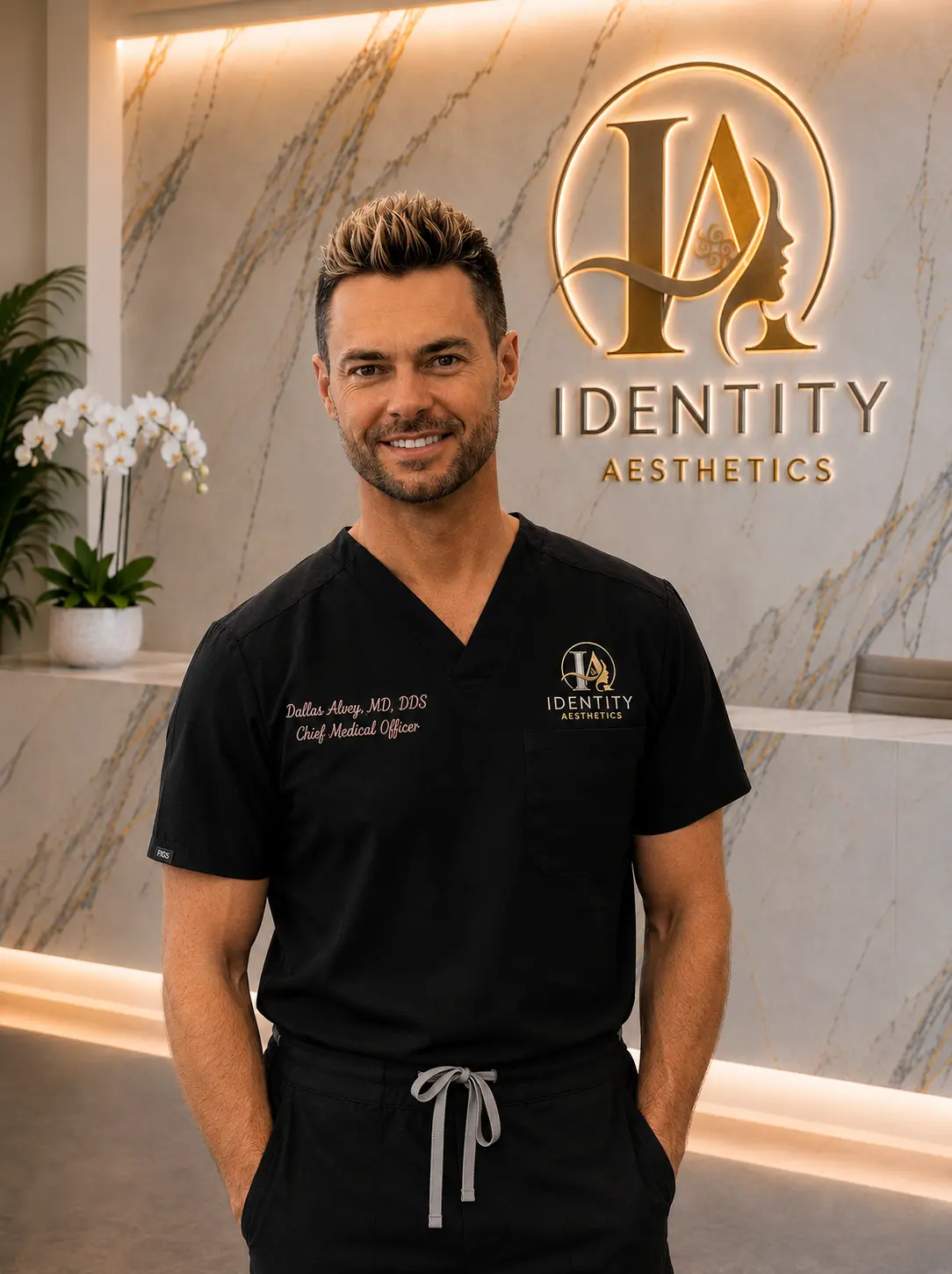
Written and reviewed by Dallas Alvey, MD, DDS
Chief Medical Officer at Identity Aesthetics with dual medical and dental training and a practice focus that includes aesthetic medicine, hormone optimization and physician-supervised wellness. View full bio.
Sources and review notes
- U.S. FDA: Dermal Fillers (Soft Tissue Fillers)
- Sharma et al. Radiographic Midfacial Volume Changes in Patients on GLP-1 Agonists. 2025.
- Gierloff et al. Aging Changes of the Midfacial Fat Compartments: A CT Study. 2012.
- Aging Changes of the Superficial Fat Compartments of the Midface Over Time: An MRI Study.
Last medical review: August 6, 2026. This article is educational and does not replace an individualized examination, diagnosis or treatment recommendation. Evidence about facial changes associated with GLP-1-supported weight loss is still developing.